Glass Identification Guide
At Knowsley Art Glass, we understand that identifying the type of glass you have can sometimes be tricky. That’s why we’ve created this helpful guide; complete with images, descriptions, and expert tips, to make the process simple and straightforward.
Whether you’re replacing an existing panel, matching a decorative design, or just curious about what’s in your home, our guide will help you recognise the different styles and finishes we offer.
Over the years, we’ve produced and worked with a wide range of decorative glass designs. While some of these glass styles are no longer in circulation, many can still be recreated in-house by our skilled team. Whether you’re looking to match an existing panel or restore a traditional design, we’ll do our best to reproduce it as closely as possible.
All of our glass is designed and made in-house, ensuring every piece reflects the same craftsmanship and quality we’ve been known for since 1980.
All of our glass is designed and made in-house, ensuring every piece reflects the quality and craftsmanship we’ve been known for since 1980.
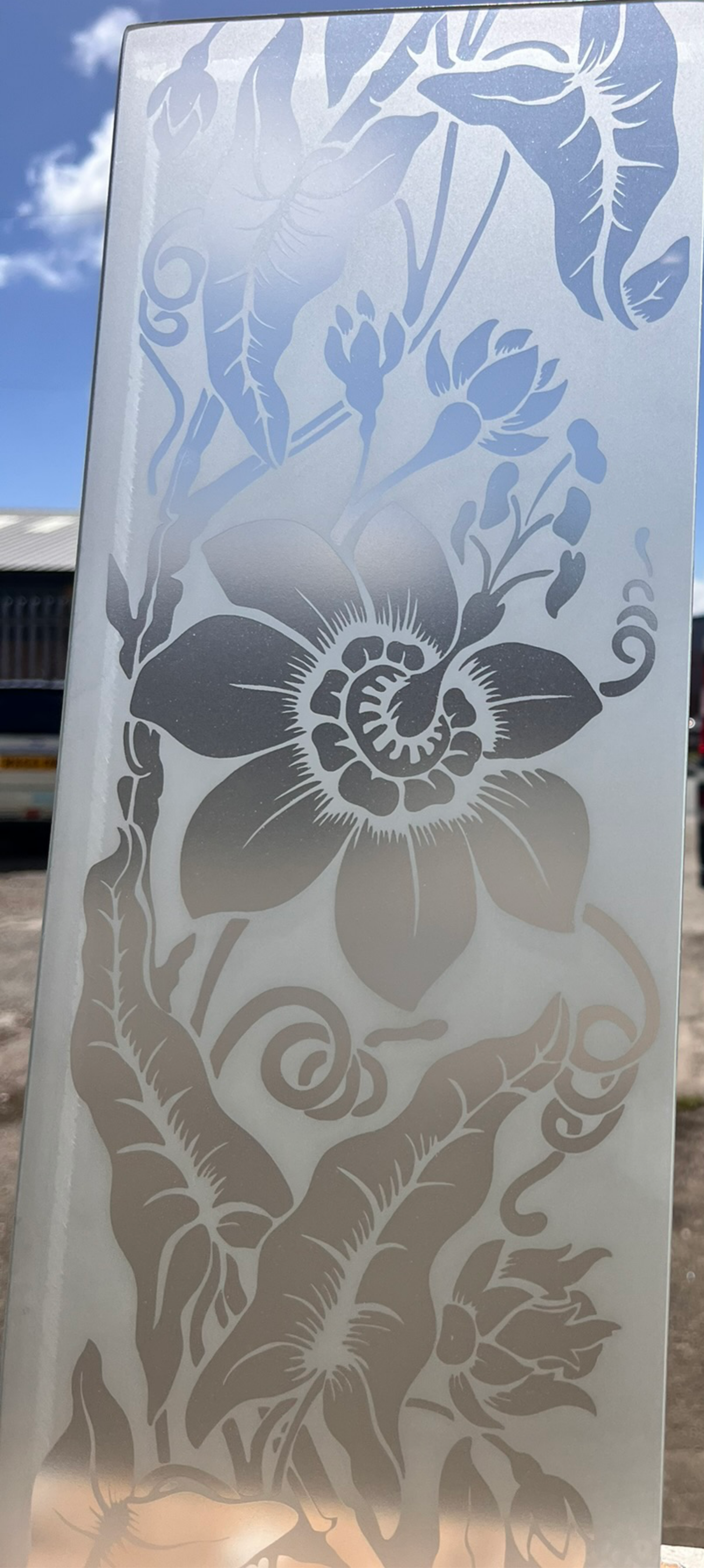
Acid Etched Glass
What is Acid Etched Glass?
Glass etching, also known as “French embossing,” is a decorative technique that originated in the mid-1800s.How is Acid Etched Glass made?
In the traditional process, paraffin wax and later Brunswick Black was applied to the glass surface as a resist layer. A decorative pattern was then stencilled or carefully scratched into the wax, exposing parts of the glass beneath.
When hydrofluoric acid vapour was introduced, it would etch into the exposed areas of the smooth glass surface, producing a frosted design with clear decorative details. Over time, variations of this method have used acids, alkalis, or physical abrasives to achieve similar frosted or textured effects.
Replicating Acid Etched Glass Designs
At our workshop, one of our main areas of expertise is replicating traditional acid-etched glass designs. While we may not always use the original historical methods, we employ modern, safer, and more cost-effective techniques that achieve the same beautiful results. Below, you’ll find a selection of classic etched glass designs from the past — many of which we can recreate, or offer similar alternatives within our standard range.
Repeat Patterns
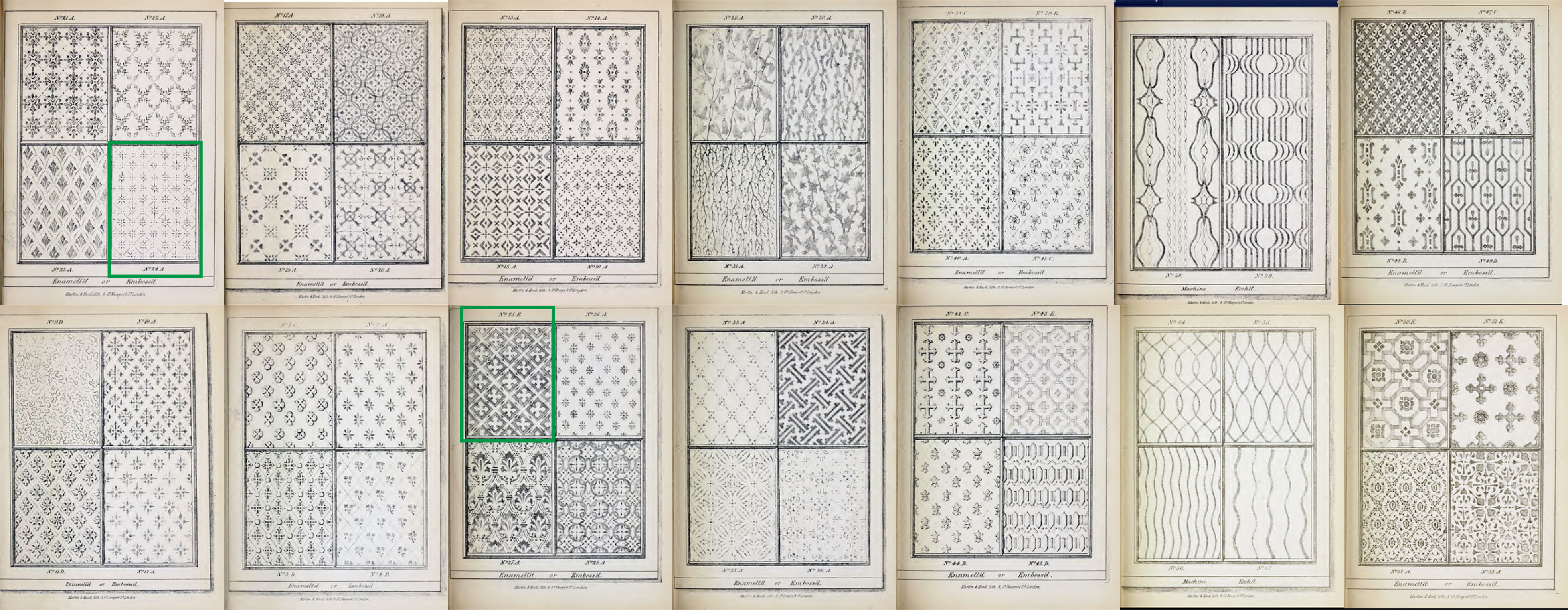
To the left, you’ll see a selection of traditional acid-etched glass patterns taken from older catalogues.
The designs highlighted in
green
are similar to styles we currently have in stock — you can view these here.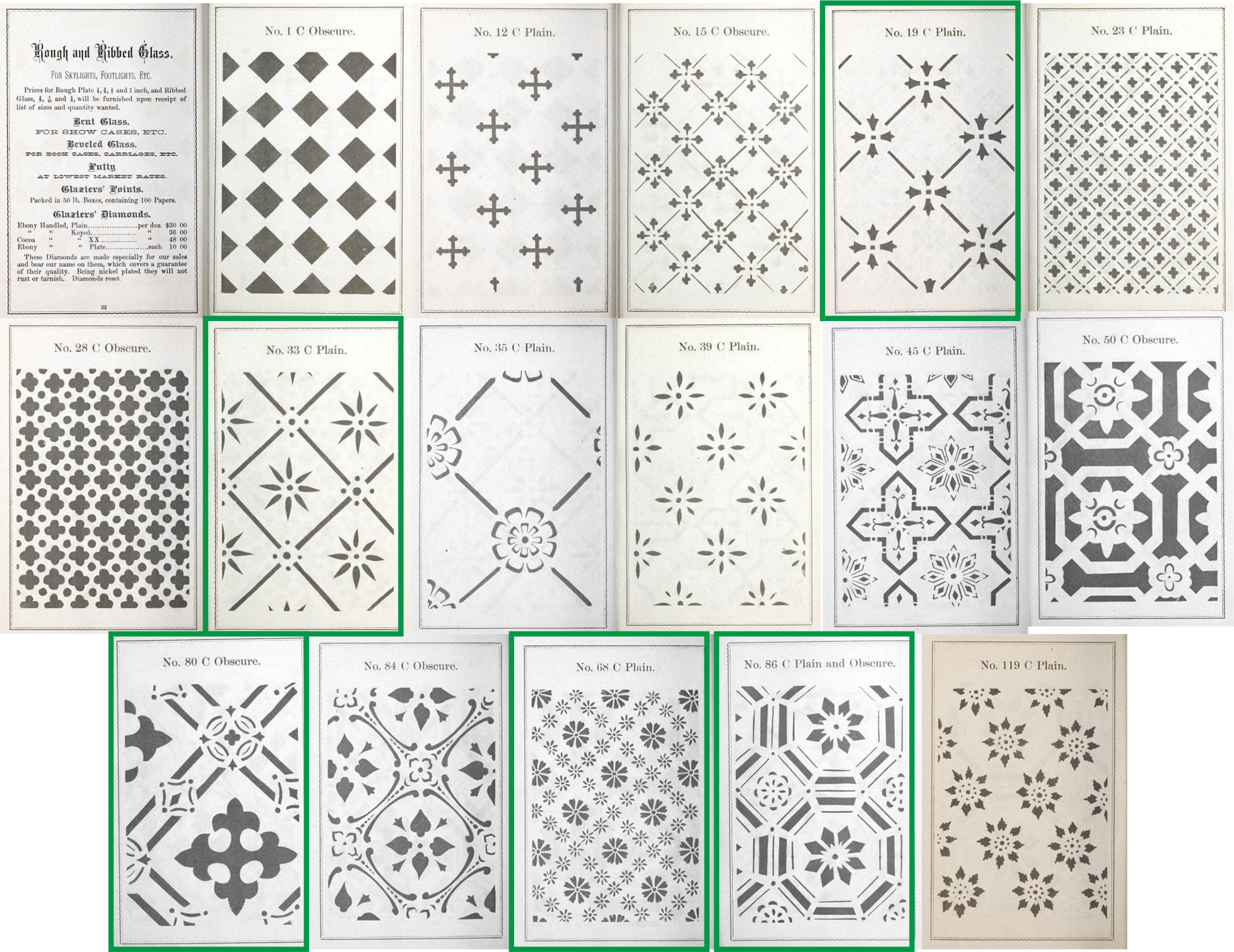
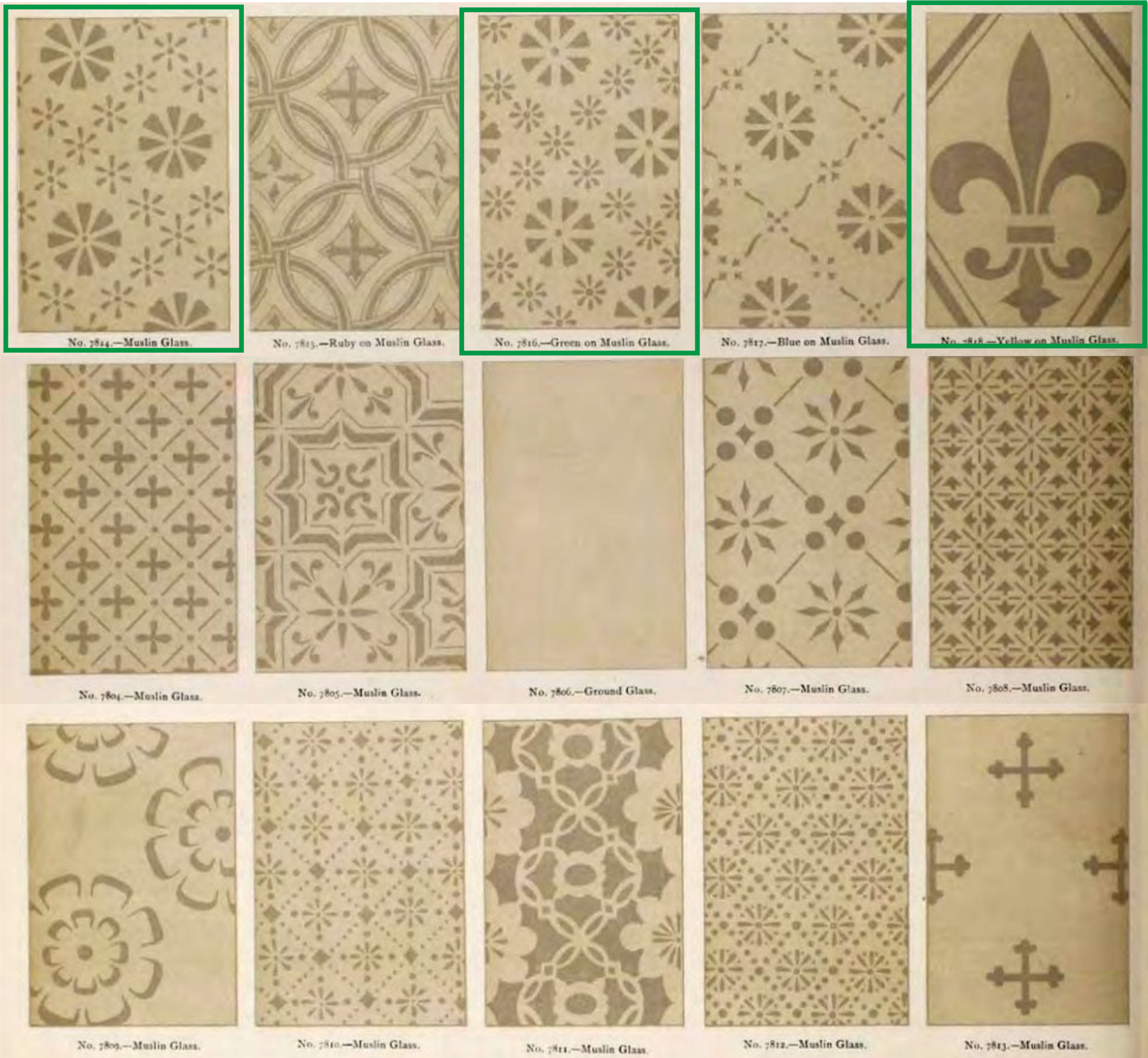
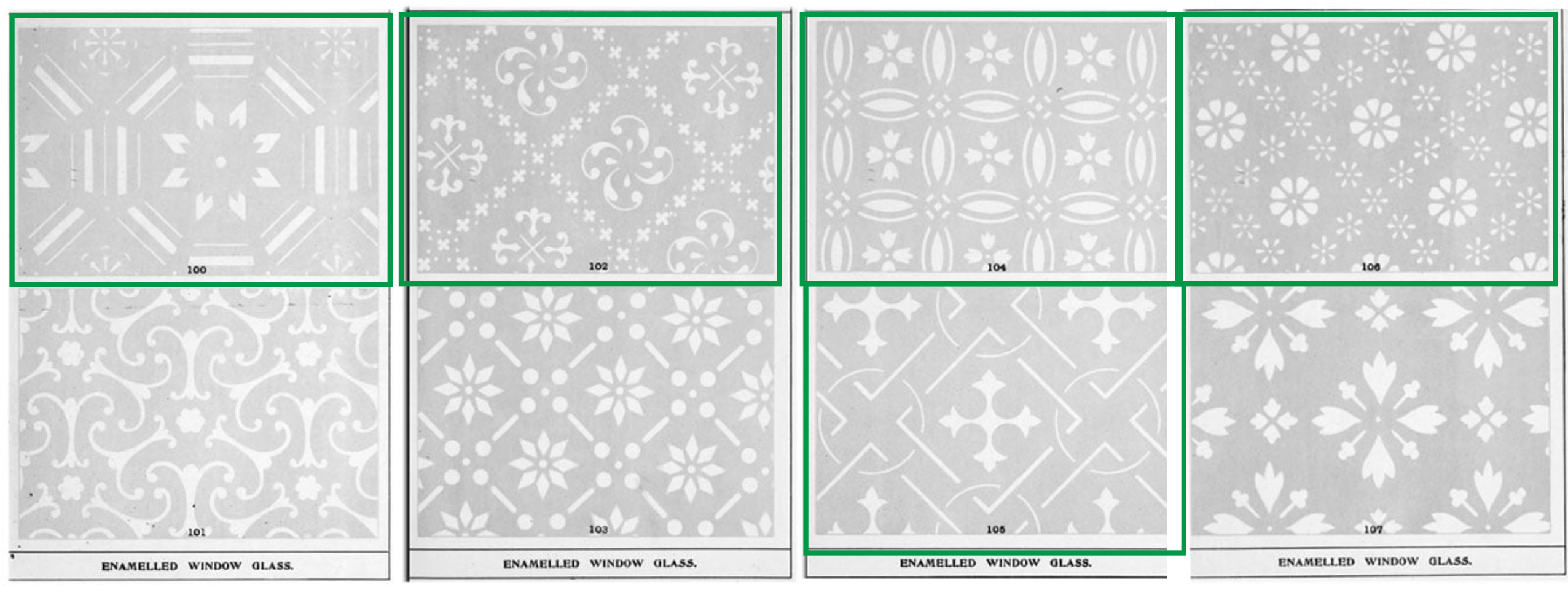
While we don’t hold standard stock of every design shown, many of these patterns can be replicated or reproduced by our skilled team upon request.
Even when we already offer a similar design, some customers prefer an exact match to their existing glass. A fantastic example of this type of custom reproduction work can be seen below. Which we made for Glass Labs
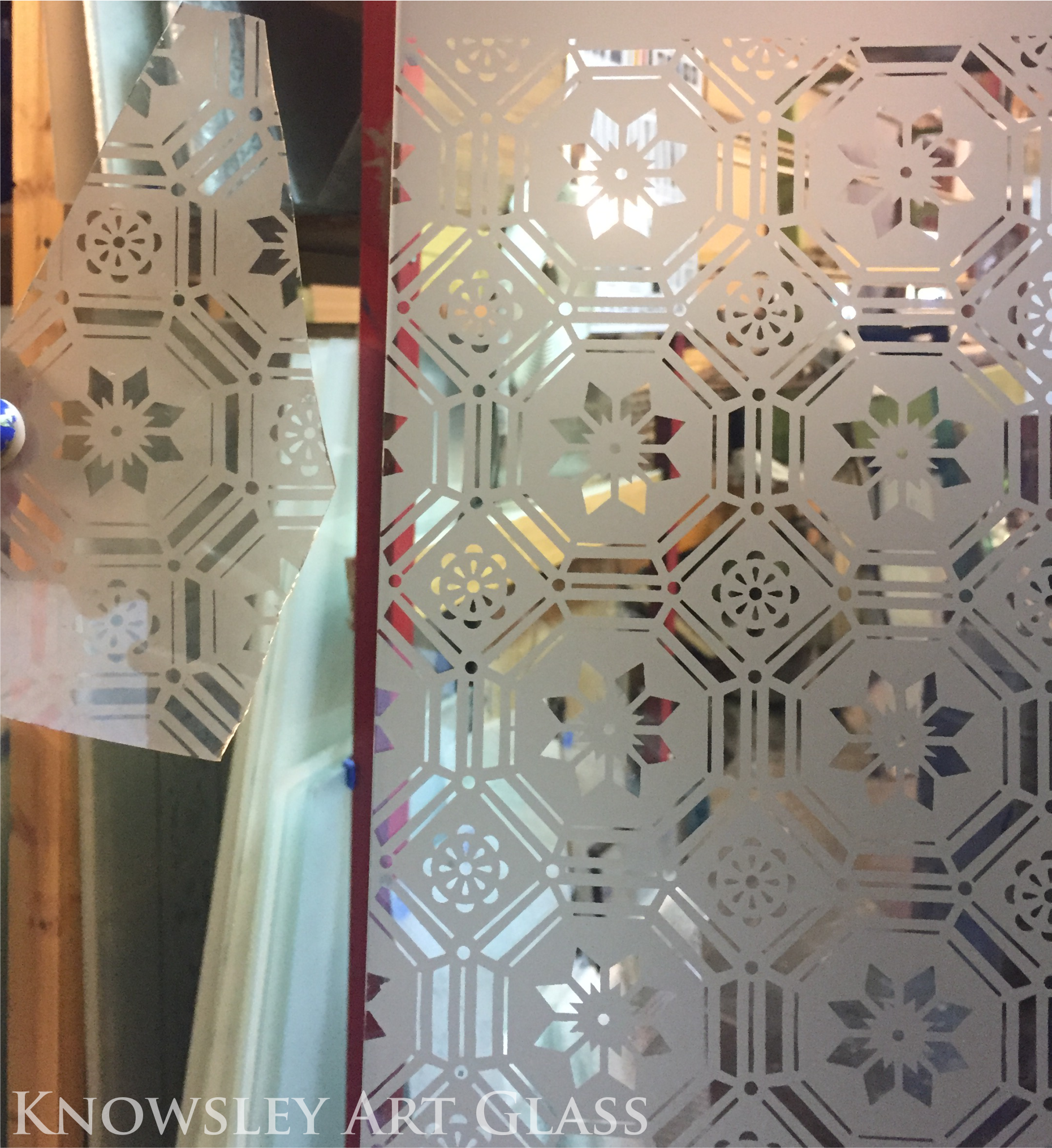
When replicating bespoke designs, we request that customers send us any original broken panes, as this allows us to recreate the design as accurately as possible. If sending the original pane is not feasible, we require multiple high-quality photographs of the original glass. These should include images both with and without a measuring tape in frame, which helps us to properly scale and replicate the design. However, for the most precise reproduction, the original pane is always preferred.
Artwork Fee
The artwork fee covers the process of digitally recreating the original design. The complexity and level of detail within the design will affect the cost, with more intricate work incurring a higher fee.
Screen Fee
The screen fee applies once the bespoke design has been digitally recreated. This fee covers the application of the design onto a screen for production. If the design includes multiple layers or requires additional colouring, multiple screens may be necessary, which will be reflected in the final cost.
Even when we already offer a similar design, some customers prefer an exact match to their existing glass. A fantastic example of this type of custom reproduction work can be seen below. Which we made for Glass Labs
Recreating Traditional Glass Panels
When replicating bespoke designs, we request that customers send us any original broken panes, as this allows us to recreate the design as accurately as possible. If sending the original pane is not feasible, we require multiple high-quality photographs of the original glass. These should include images both with and without a measuring tape in frame, which helps us to properly scale and replicate the design. However, for the most precise reproduction, the original pane is always preferred.
Artwork Fee
The artwork fee covers the process of digitally recreating the original design. The complexity and level of detail within the design will affect the cost, with more intricate work incurring a higher fee.
Screen Fee
The screen fee applies once the bespoke design has been digitally recreated. This fee covers the application of the design onto a screen for production. If the design includes multiple layers or requires additional colouring, multiple screens may be necessary, which will be reflected in the final cost.
Figured Rolled Glass
What is Rolled Figured Glass?
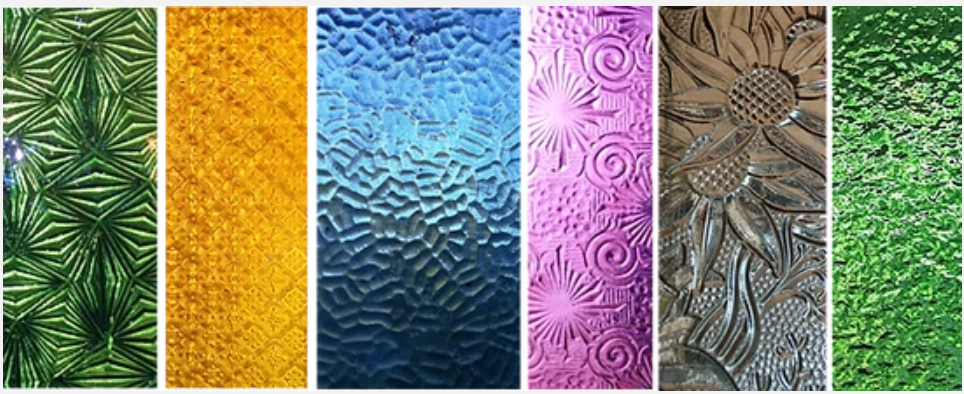
Rolled figured glass (also known as patterned or textured glass) is a type of decorative glass that features a pattern or texture impressed onto one side of the surface during the manufacturing process. This gives the glass both a distinctive appearance and a level of privacy, while still allowing light to pass through beautifully.How is Figured Rolled Glass made?
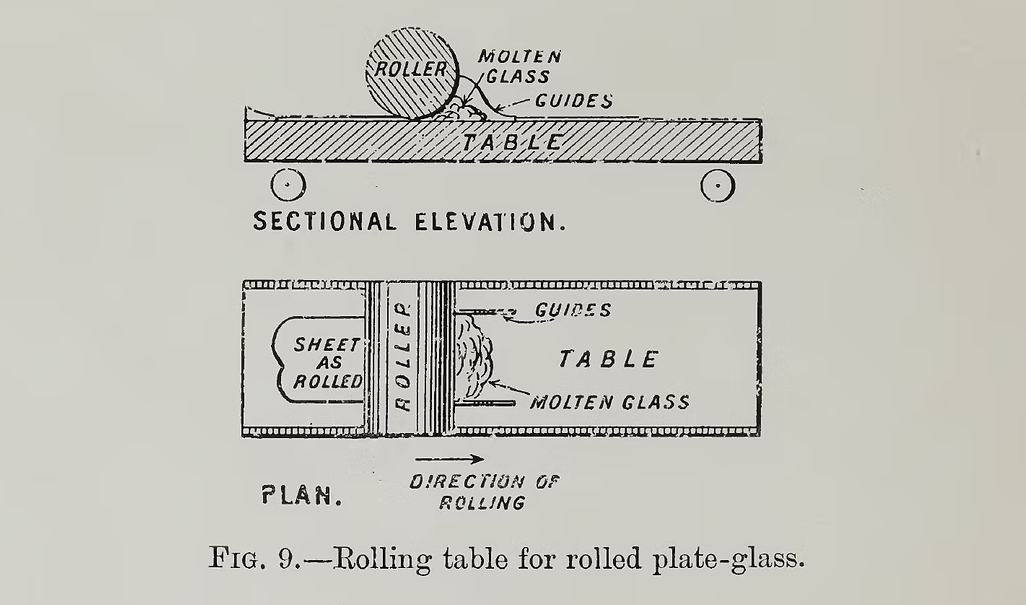
Rolled figured glass is produced by passing molten glass between two metal rollers. One of these rollers has a patterned surface that imprints the design onto the soft glass as it cools. This process allows for a wide variety of textures — from subtle ripples and frosted effects to bold geometric or floral patterns.
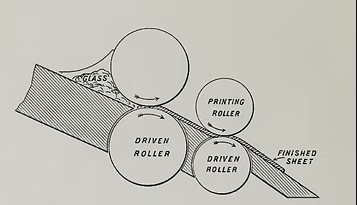
Figured Rolled Glass Designs
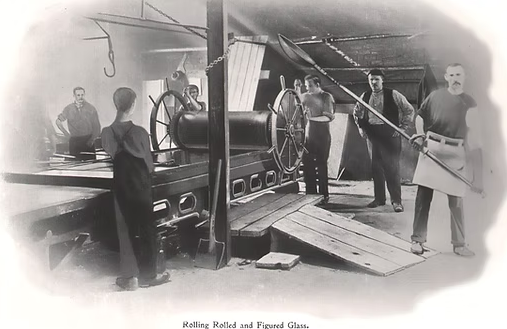
British Products
Until around 1930, almost all window glass used in Australia was imported. Much of it came from two dominant English manufacturers: Chance Brothers, located in Smethwick near Birmingham, and Pilkington Brothers, based in St Helens near Liverpool.
This was also true for rolled and figured glass. A search of 19th-century Australian newspapers reveals numerous advertisements for imported glass products — for example, an 1855 ad for “Chance Brothers & Co’s Rough Rolled Glass”, and an 1863 reference to “Hartley Cathedral Glass” being installed in Ballarat. Many similar records exist, suggesting that rolled — and possibly figured — glass had become a staple building material in Australia by the 1870s.
However, little is known about the specific patterns that were commonly available at that time. Trade catalogues and advertisements from the era rarely included illustrations, and pattern names were seldom mentioned. More detailed field research would be needed to identify these early designs.
From around 1890 onward, we have much clearer information about the glass products available. The following section presents a collection of known patterns, with dates indicating either the registration date of the design or the publication date of the source image. These dates may differ from the earliest period of manufacture, as many popular patterns remained in production for decades.
We will begin with British glass, continue with Australian products, then briefly examine the American market, and conclude with examples of glass yet to be identified or dated.
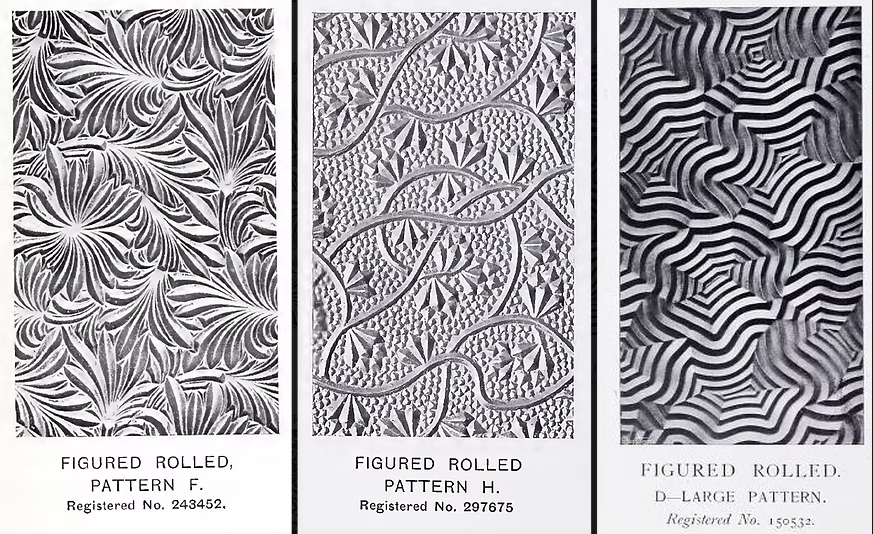
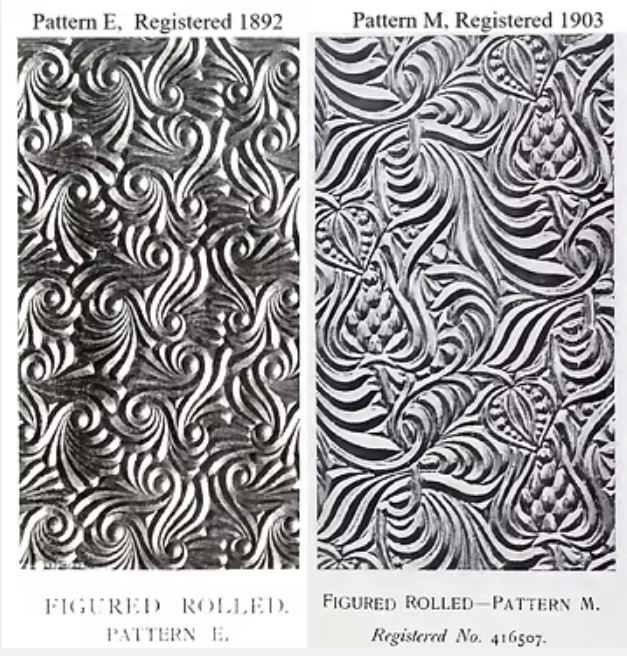
Chance Brothers & Co. (1898–1905) The magazine Academy Architecture published a series of illustrated advertisements by Chance Brothers & Co. between 1898 and 1905. In these ads, Chance described several product lines — Rolled Plate, Figured, Rolled Cathedral, and Double Rolled Cathedral — presumably listed in ascending order of quality. All of the images featured in the ads represent the Figured Rolled range.
By cross-referencing design numbers with registration data, the pattern dates can be traced from 1890 to 1905, suggesting that production likely began shortly after registration.
The first seven patterns were identified only by letters, with registration dates ranging from 1890 to 1903. Their designs reflect typical Victorian-era aesthetics — detailed, ornamental, and often floral.
Pattern K features a damask-style motif.
Pattern M depicts vines of hop.
Pattern G, a more common design, later became known as “Granite” and is frequently found throughout Queensland.
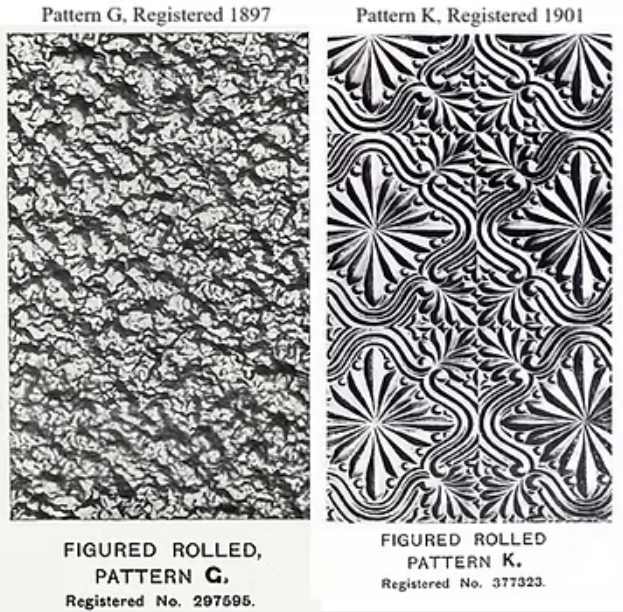
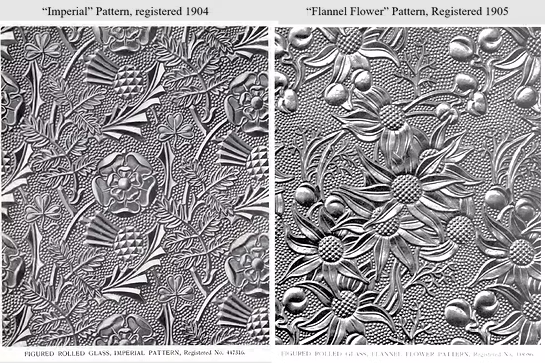
Chance Brothers & Co, probably ca. 1900 - 1910
Kristelle is a fairly widespread pattern in Queensland houses from the first decate of the new century. I don't have a design date, but 1900 -1910 seems likely.
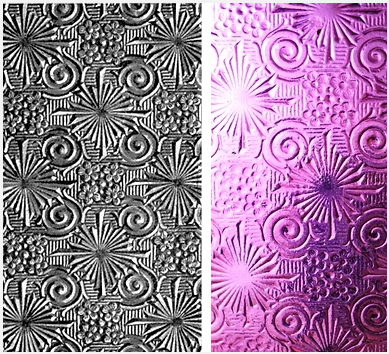
Kristelle is a fairly widespread pattern in Queensland houses from the first decate of the new century. I don't have a design date, but 1900 -1910 seems likely.
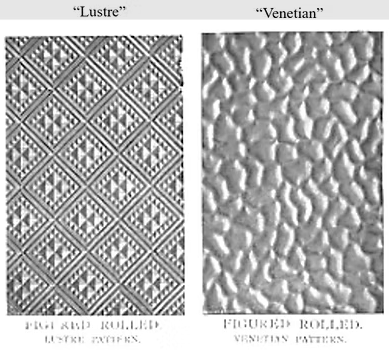
These two patterns - "Lustre" and "Venetian", were found in a 1907 catalogue by Rowe Bros & Co. hardware dealers. The manufacturers are unknown but we can assume that they were British - likely Chance or Pilkington.
Pilkington Bros. 1901
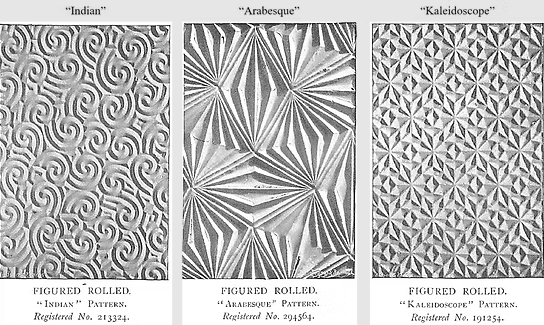
This collection is from another British hardware catalogue, dated 1901. The glass is by Pilkington, and it contains a pattern that was widely used in Australia for several decades - namely Muranese, in two different sizes Other patterns reflect the Victorian fascination with exotic cultures - "Indian", "Arabesque" and "Morocco".
MURANESE: This pattern is still available, but this cannot be toughened, which means it is not suitable for doors/windows, these days it's mainly used in leadlights/stained glass panels. This is also available in other tinted.
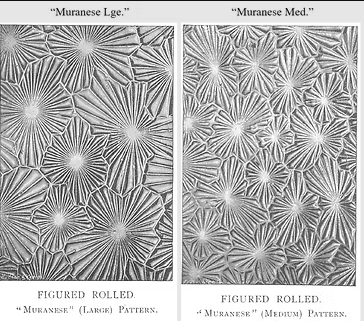
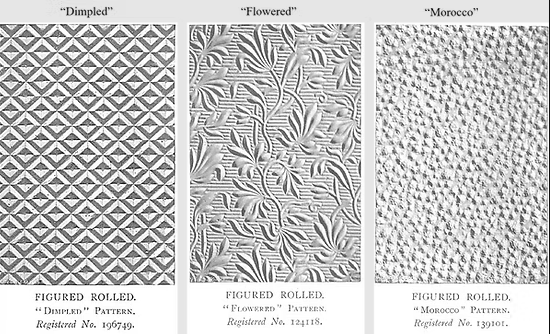
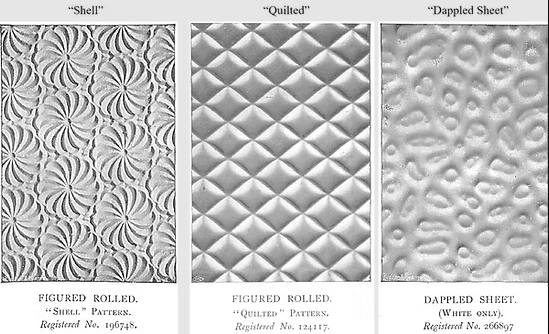
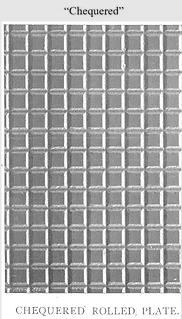
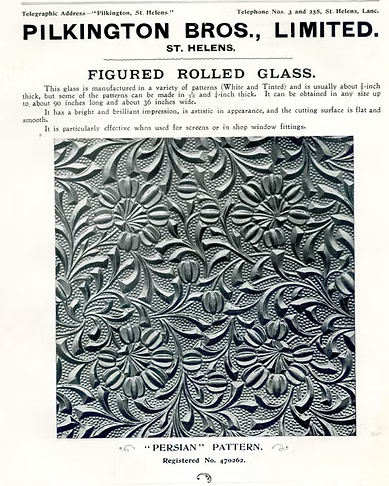
Pilkington Bros., probably ca. 1900
Pilkington Bros. 1920s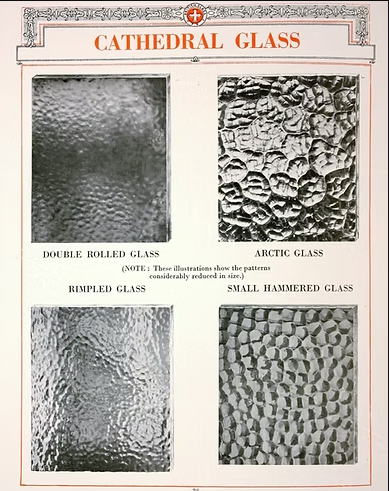
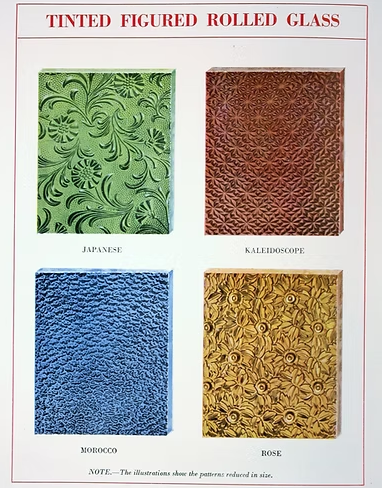
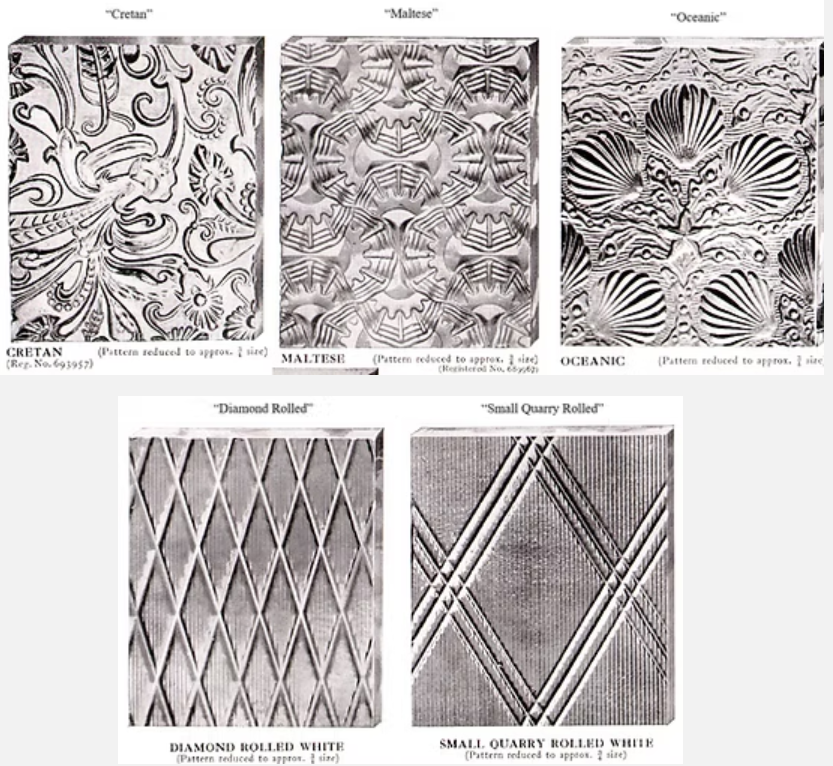
The Tinted Figured Rolled Glass range had 14 patterns, some of which came in multiple sizes and about 100 different shades. Pilkington recommended the product for public buildings, or for any situation where maximum light was required with some privacy.
The patterns listed include Arctic large and small, three sizes of Muranese, three sizes of Morocco (including “pinhead” size), Cretan, Oceanic, Rose, Maltese, Japanese, Kaleidoscope, Rippled, Quilted, Persian, Shell and Arabesque. Only four of the patterns are illustrated in the catalogue, as per below.
The patterns listed include Arctic large and small, three sizes of Muranese, three sizes of Morocco (including “pinhead” size), Cretan, Oceanic, Rose, Maltese, Japanese, Kaleidoscope, Rippled, Quilted, Persian, Shell and Arabesque. Only four of the patterns are illustrated in the catalogue, as per below.
Chance Bros. and Pilkington Bros., ca. late 20s
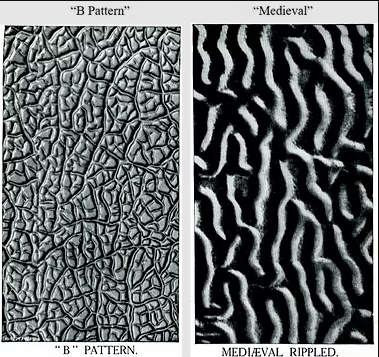
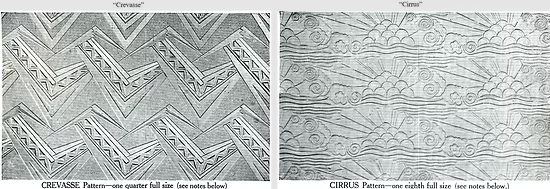
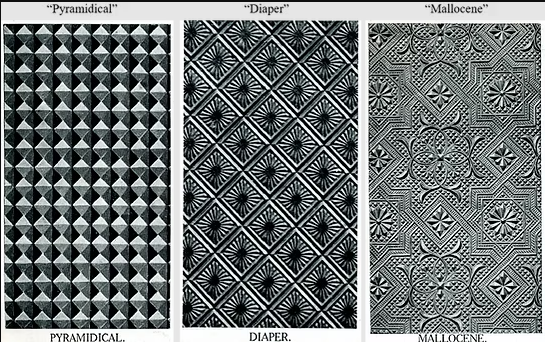
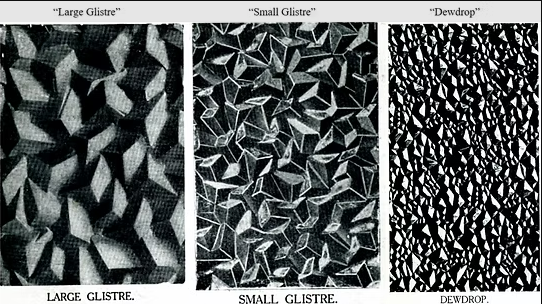
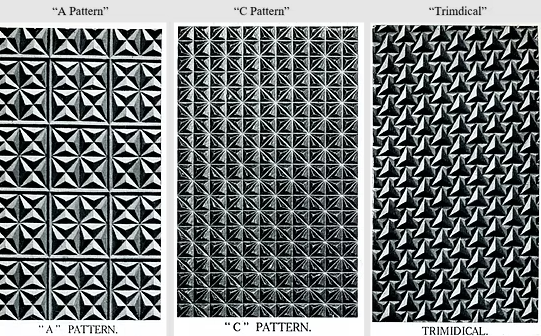
Pilkington Bros. 1939
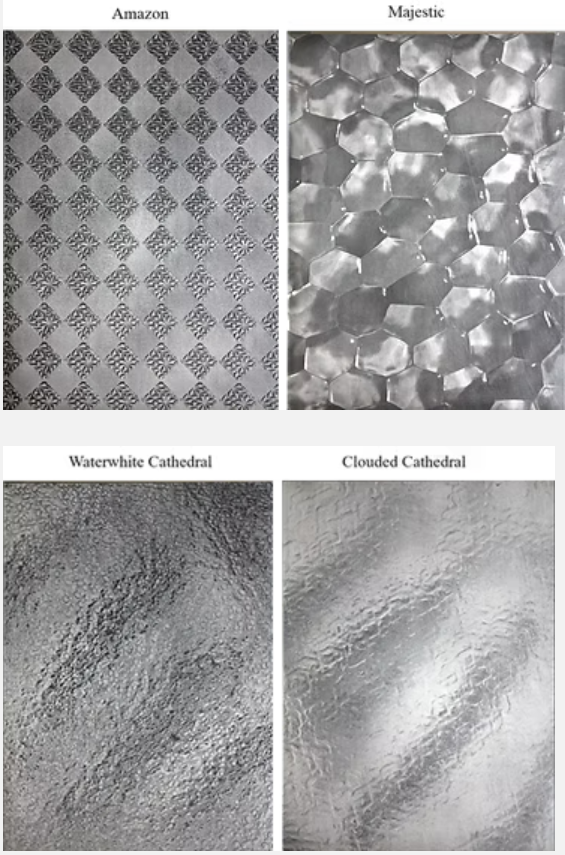
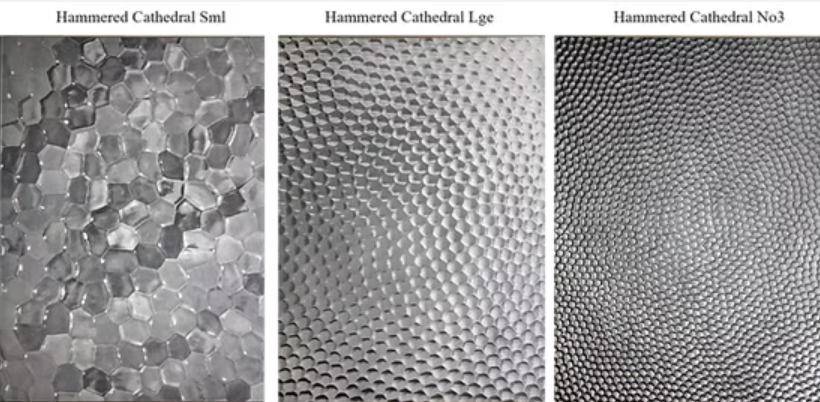
Pilkington Bros. ca.early 1930s

sales@artglass.org.uk
0151-489-2214
CONTACT